45 min
Ski Plane & Helicopter Glacier Combo Flight
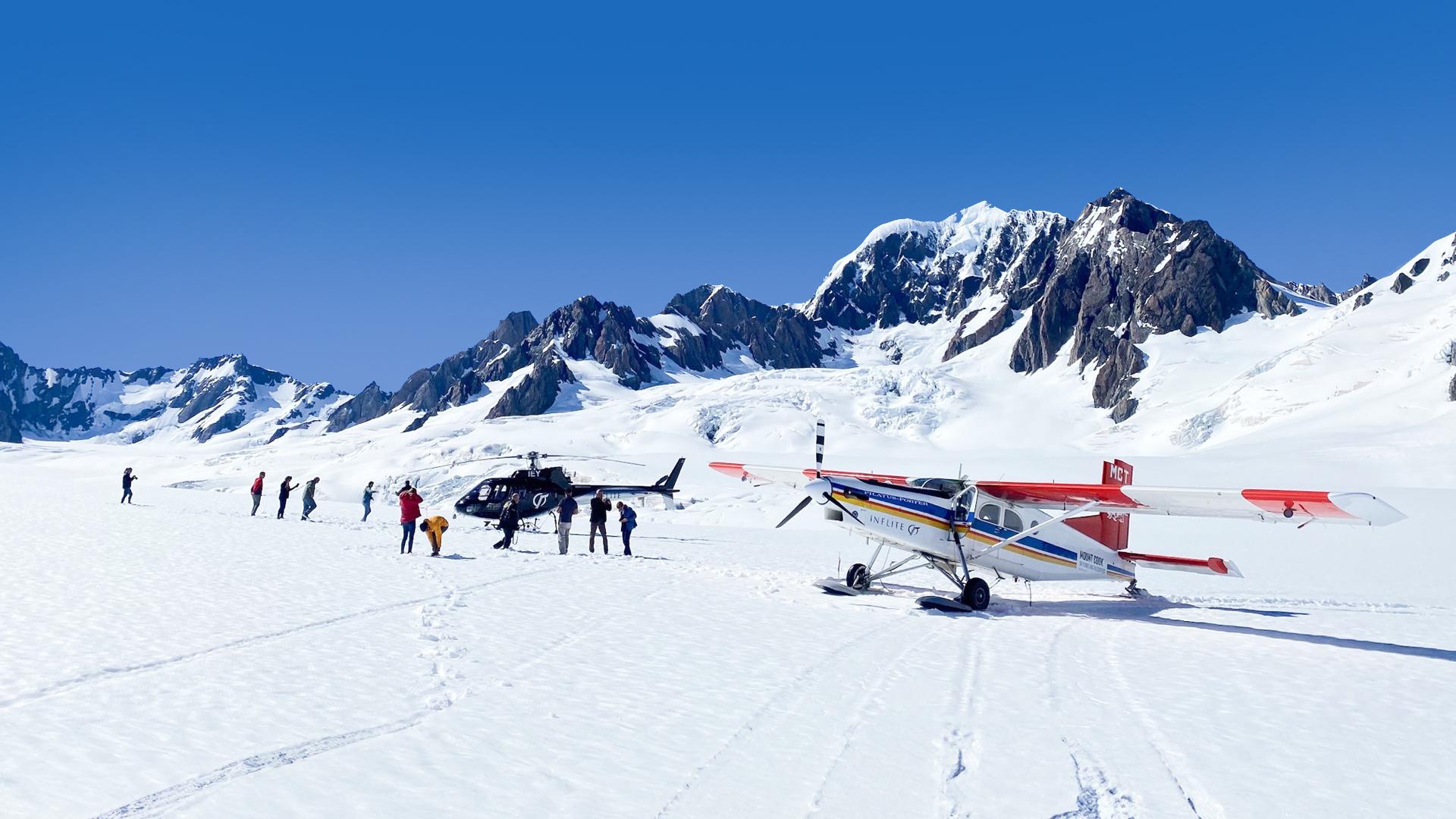
Dual-aircraft adventure over Aoraki/Mount Cook with a snow landing on the Tasman Glacier
Reserve
Hand-picked by our editors — only the best 5 aerial experiences from 18 reviewed.
Verified partners for every tour, free cancellation where available, and instant confirmation on every booking.
45 min
Dual-aircraft adventure over Aoraki/Mount Cook with a snow landing on the Tasman Glacier
Reserve
25 min
Soar above New Zealand's highest peaks and land in the heart of the Southern Alps on this aerial adventure.
Reserve
3 hr
Land on New Zealand's longest glacier for a guided ice trek with aerial views of Aoraki/Mount Cook
ReservePrices from verified partners. Availability updates in real time at checkout. Free cancellation policies apply where shown.
The landmarks, rooms, and views travelers on this tour remember — all visible on a single visit.
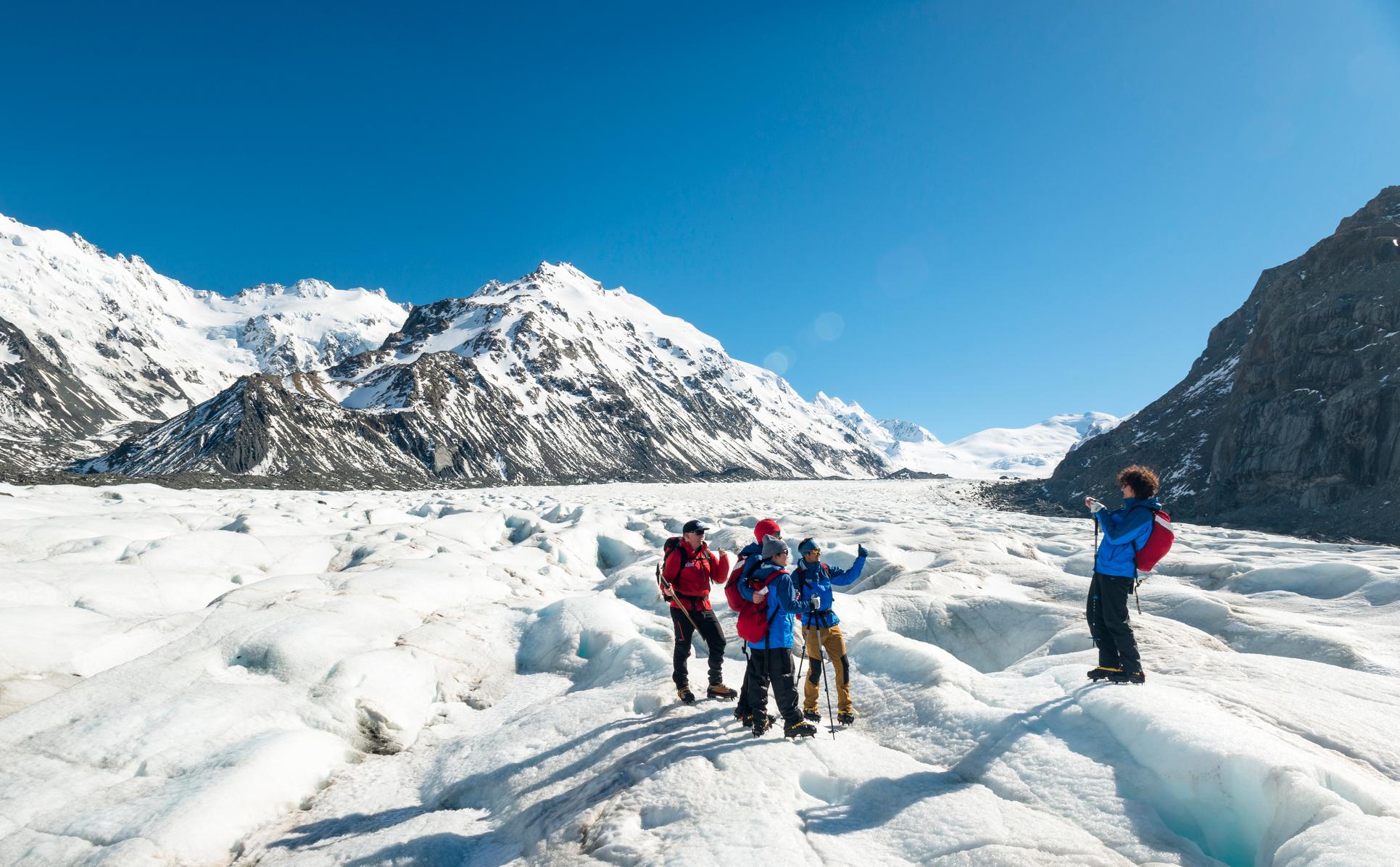
Explore the longest glacier in New Zealand with a snow landing included in your mount cook ski plane and helicopter glacier combo flight.
Witness the sheer scale of this icefall, a prominent feature visible during your mount cook ski plane and helicopter glacier combo flight.
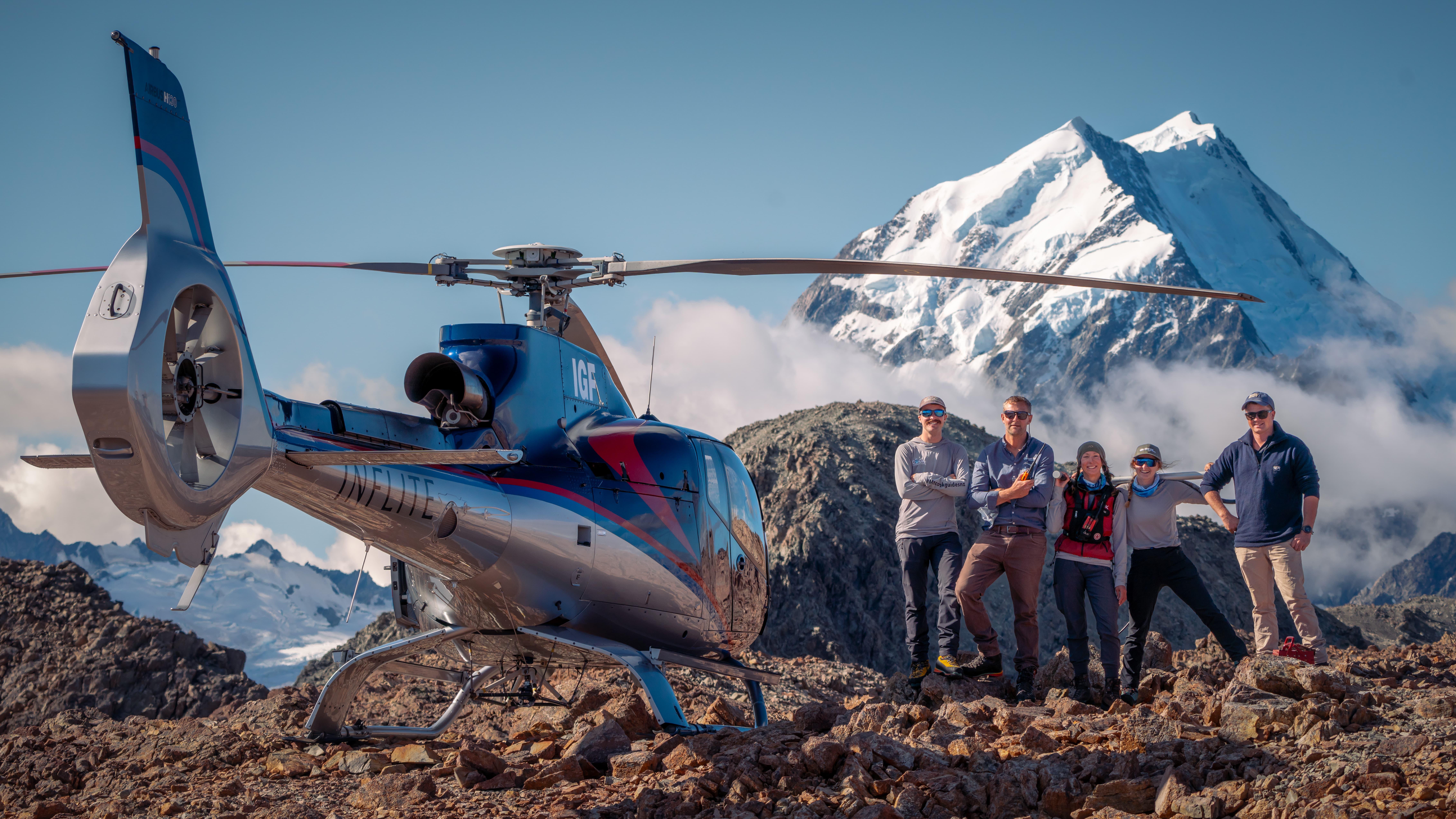
Fly close to the majestic peak of New Zealand's highest mountain as part of your mount cook ski plane and helicopter glacier combo flight.
View the striking turquoise waters of the glacial lake below during your mount cook ski plane and helicopter glacier combo flight.
Observe the vast, elevated snowfield that serves as a landmark during your mount cook ski plane and helicopter glacier combo flight.
They complement each other; most visitors who do both call the mount cook ski plane and helicopter glacier combo flight the more versatile choice for experiencing Aoraki Mount Cook National Park. Choosing between these mount cook ski plane and helicopter glacier combo flight tours depends on whether you prefer the nostalgic rumble of fixed-wing aviation or the precision of rotor-craft.
| Feature | Top pick Combo Flight | Helicopter-Only |
|---|---|---|
Aircraft Type |
Fixed-wing and Helicopter | Helicopter only |
Landing Style |
Snow runway landing and hover | Alpine pad or snow landing |
Cabin Noise Levels |
Variable engine tones | High frequency rotor noise |
Historical Significance |
Pioneering ski plane heritage | Modern mountain aviation standard |
Glacier Access |
Combined landing techniques | Direct glacial pad access |
Speed and Maneuverability |
Moderate takeoff and rapid hover | High vertical agility |
| See tickets → |
Verdict: If you prioritize historical aviation variety, secure your mount cook ski plane and helicopter glacier combo flight tickets, whereas helicopter-only options provide superior access to remote, high-altitude terrain.
Choose your ticket, select your date, and reserve in under two minutes. Secure checkout handled by our verified partner.
Instant confirmation by email, with a mobile voucher you can save offline. No printing, no queuing at a collection desk.
Arrive at the entrance, show your voucher on your phone, and walk in. Most tickets include priority or skip-the-line access.
Practical details for your visit straight from our verified partners — hours, access, rules, and how to get there.
Wear warm, layered clothing as alpine landing sites are typically 1–3 degrees cooler than the airport. Sturdy, closed-toe shoes are recommended for glacier terrain.
Passengers are weighed at check-in to meet safety regulations. Leave large bags in your vehicle, as aircraft space is strictly limited.
Photography is encouraged during the flight and glacier landing. Ensure cameras do not touch aircraft windows to avoid scratching the surface.
Please contact the operator directly to discuss mobility requirements. Aircraft boarding involves stepping onto the runway and into the cabin.
Mobile phones are permitted for photography but must be kept secure. Follow pilot instructions regarding device use during take-off and landing.
Child rates apply for ages 0–12, while ages 12 and over require an adult ticket. Infants must be booked to ensure a seat is allocated per aviation regulations.
Food and drink are not provided on flights. Mount Cook Village, located 6 kilometres away, offers several local dining options.
Animals are not permitted on scenic flights. Please arrange pet care prior to your visit to Aoraki/Mount Cook.
All flights are subject to minimum passenger numbers and weather conditions. Final flight decisions are made by the pilot shortly before departure.
Best time to go, insider tips, nearby landmarks, and the cancellation fine print — flip through to skim what matters to you.
Flexible, no hidden fees.
Full refund available for cancellations made at least 48 hours prior to check-in time. Scenic flight costs are separate from national park access.
Mount Cook Airport sits at 645 metres above sea level on the terminal moraine plain of the Tasman Glacier, positioning it as New Zealand's highest aerodrome and the only commercial base within Aoraki/Mount Cook National Park. The airstrip was carved from glacial outwash in 1971 specifically to serve ski-plane operations onto the névé, the compacted snow fields above 2,400 metres where wheeled aircraft can land on prepared surfaces throughout the southern summer. The combination of fixed-wing ski planes and helicopters emerged in the 1990s when operators recognised that each platform reveals distinct alpine geography: ski planes achieve altitude efficiently and cover the 27-kilometre length of the Tasman Glacier in minutes, while helicopters manoeuvre into narrow valleys and deposit passengers onto ice shelves inaccessible to fixed-wing craft. The Mount Cook ski plane and helicopter glacier combo flight capitalises on this dual capability. Ski planes typically climb to 3,050 metres, circling the summits of Aoraki/Mount Cook (3,724m), Mount Tasman (3,497m), and the dozen glaciers that radiate from the Main Divide. The Tasman, New Zealand's longest glacier at 23 kilometres, loses an average of 180 metres of terminus length annually, a retreat documented since systematic measurement began in 1973. Helicopters then descend into the accumulation zone where annual snowfall exceeds melt, landing on consolidated névé marked by survey poles and inspected daily for crevasse movement. Passengers disembark at approximately 2,700 metres for ten to fifteen minutes, standing on ice layers that may be decades or centuries old depending on flow rates. Aoraki/Mount Cook National Park protects 707 square kilometres of the Southern Alps, a range still rising at 7 millimetres per year due to tectonic collision between the Pacific and Australian plates. The park's 140 peaks above 2,000 metres create New Zealand's largest icefield outside Fiordland, with 72 named glaciers draining east and west. Weather stability is highest between November and March, when westerly airflows weaken and the alpine ridgeline blocks moisture. Morning departures between eight and ten o'clock secure the calmest air and the low-angle light that defines crevasse fields and ice seracs in sharp relief, conditions that deteriorate as thermal convection builds through midday.
"The Tasman loses 180 metres of terminus length annually, a retreat documented since 1973."
A step-by-step walkthrough of the visit — what you'll see, how long each stage takes, and the details that matter.
You arrive at Mount Cook Airport by eight-thirty, checking in at the operations hangar where weather briefings scroll across monitors and pilots annotate flight paths on laminated topographic sheets. Weight is recorded for load calculations, and you're issued a parka if temperatures at altitude require it. The ski plane taxis to the grass threshold, its fixed undercarriage fitted with retractable skis that will deploy over the glacier. You lift off southward, climbing over Lake Pukaki's turquoise outflow before banking east toward the Tasman's white expanse. The ski plane follows the glacier's centreline at 3,000 metres, close enough to distinguish individual crevasses lacing the icefall below the Grand Plateau. You circle Aoraki's summit pyramid, its north face dropping 2,500 vertical metres to the Hooker Valley. The plane descends, touching skis onto packed névé at a coordinates the pilot has used forty times this season. Silence replaces engine noise. You step onto the glacier for twelve minutes, surface texture shifting from smooth to granular under boot pressure, aware that ten metres of ice separate you from bedrock. The helicopter arrives, rotors compressing the thin air, and you transfer without pause. The return flight drops into the Murchison Valley, hovering at ice-cliff faces where meltwater tunnels exhaust into terminal lakes. You cross the Ben Ohau Range at ridge height, landing back at the airport forty minutes after departure.
For the best weather stability and light conditions, arrive between 08:00–10:00 for your mount cook ski plane and helicopter glacier combo flight.
Yes, children aged 0–12 can join the mount cook ski plane and helicopter glacier combo flight at a child rate, provided an adult accompanies them.
A typical mount cook ski plane and helicopter glacier combo flight lasts 45 minutes, though you should allow 2 hours for the total experience.
Most mount cook ski plane and helicopter glacier combo flight tours include a 10–15 minute landing on the Tasman Glacier, subject to weather.
If the mount cook ski plane and helicopter glacier combo flight is cancelled due to weather, you will receive a full refund or can reschedule at no cost.
Bring sunglasses, a warm jacket, and your camera to capture the scenery during your mount cook ski plane and helicopter glacier combo flight.
Yes, we highly recommend booking your mount cook ski plane and helicopter glacier combo flight tickets in advance, especially during the peak summer season.
Yes, there is an individual weight limit of 116 kg for all mount cook ski plane and helicopter glacier combo flight passengers.
No, drones are prohibited in Aoraki/Mount Cook National Park and cannot be brought on any mount cook ski plane and helicopter glacier combo flight.